Engineering in Kerikeri — Local Context
Kerikeri Soil Conditions
Kerikeri's engineering character is shaped by the Kerikeri Basalt Formation — a sequence of ancient volcanic basalt flows that underlie much of the Far North. Weathering of this basalt has produced the area's distinctive red-brown clay soils, which are widespread across Kerikeri, Waipapa, and the surrounding lifestyle blocks. These volcanic clays behave differently from the soils found in other parts of Northland: they have reasonable bearing capacity when dry but become plastic and potentially expansive when saturated. The implication for building is that foundation design in Kerikeri must account for seasonal moisture variation and the shrink-swell behaviour of these clays — a stiffened raft or deepened footing is often required where standard strip foundations would be used elsewhere.
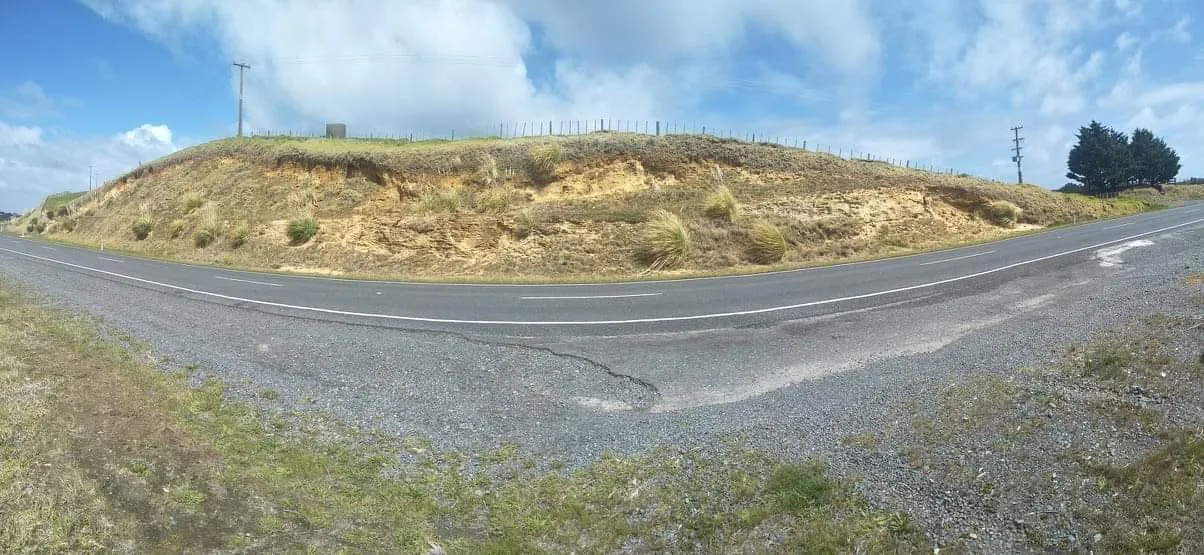
Depth to competent basalt rock varies across the district. In some locations — particularly on the elevated ground near the Kerikeri township — rock is encountered within 1–2 m. In other areas, especially on gentler slopes and flat ground near Waipapa and the Kerikeri River corridor, deep weathered clay profiles extend several metres before reaching material suitable for founding. Identifying the depth to rock and characterising the weathered profile above it are two of the primary aims of a geotechnical investigation in Kerikeri. Along the Kerikeri and Waipapa river terraces, the soil character changes to sandy loams and silty alluvial deposits with lower bearing capacity and shallower groundwater tables — these sites require their own assessment approach.
Common geotechnical issues in Kerikeri include expansive clay foundation movement, slope instability on the steeper basalt scarp faces, and shallow seasonal groundwater that influences both foundation depth and wastewater soakage field sizing. Our team has assessed hundreds of Kerikeri sites and understands these patterns — which is why our site assessments are faster and more accurate than those from engineers unfamiliar with local conditions.
Far North District Council — What Kerikeri Projects Need
All building and resource consent applications in Kerikeri go through Far North District Council (FNDC). FNDC has its own engineering requirements, consent processing timelines, and report formats that differ from other councils. Key points for Kerikeri projects:
Geotechnical Report Required
FNDC requires a geotechnical site suitability assessment for most new building consent applications. On sites with slopes, variable fill, or in hazard-mapped areas, a full geotechnical investigation is mandatory. Our reports are written specifically to meet FNDC's consent officer requirements, reducing the risk of RFI requests and delays.
TP58 Wastewater Design
Properties not connected to the Kerikeri reticulated sewer require a TP58 wastewater assessment as part of the building consent. TP58 design in Kerikeri involves soakage testing in the volcanic clay soils — which often show low permeability — requiring specific system types (pressure dosed, mound systems, or alternate disposal). We carry out the soakage testing and produce the TP58 report in a single coordinated visit.
Stormwater Management
FNDC requires stormwater management plans for new developments. Urban Kerikeri sections connecting to reticulated stormwater infrastructure need a straightforward management plan, while rural and lifestyle blocks require on-site stormwater management demonstrating that runoff from impervious surfaces is safely managed. Subdivisions require detailed stormwater engineering to FNDC's development engineering standards.
Resource Consent — When Needed
Not all Kerikeri development needs a resource consent — but earthworks over certain thresholds, subdivision, development near waterways, and non-complying land uses do. Northland Regional Council (NRC) also requires resource consents for activities affecting the region's water resources. We provide the engineering reports and assessments required for both FNDC and NRC resource consent applications in Kerikeri. See our planning consultant Kerikeri page for more detail.
Travelling to Kerikeri for Your Project?
Many of our Kerikeri clients are based in Auckland or further afield — buyers doing due diligence on a lifestyle block, or owners travelling up to attend a site visit or meet with FNDC. If you're staying overnight, Kerikeri accommodation at Kerigold Chalets is a few minutes from the town centre and our office, making it easy to combine a site inspection, a council meeting, and a look around the area in one trip.